
Emergency Gate Repair in Chicago: Same-Day Response for Stuck-Open and Stuck-Closed Gates
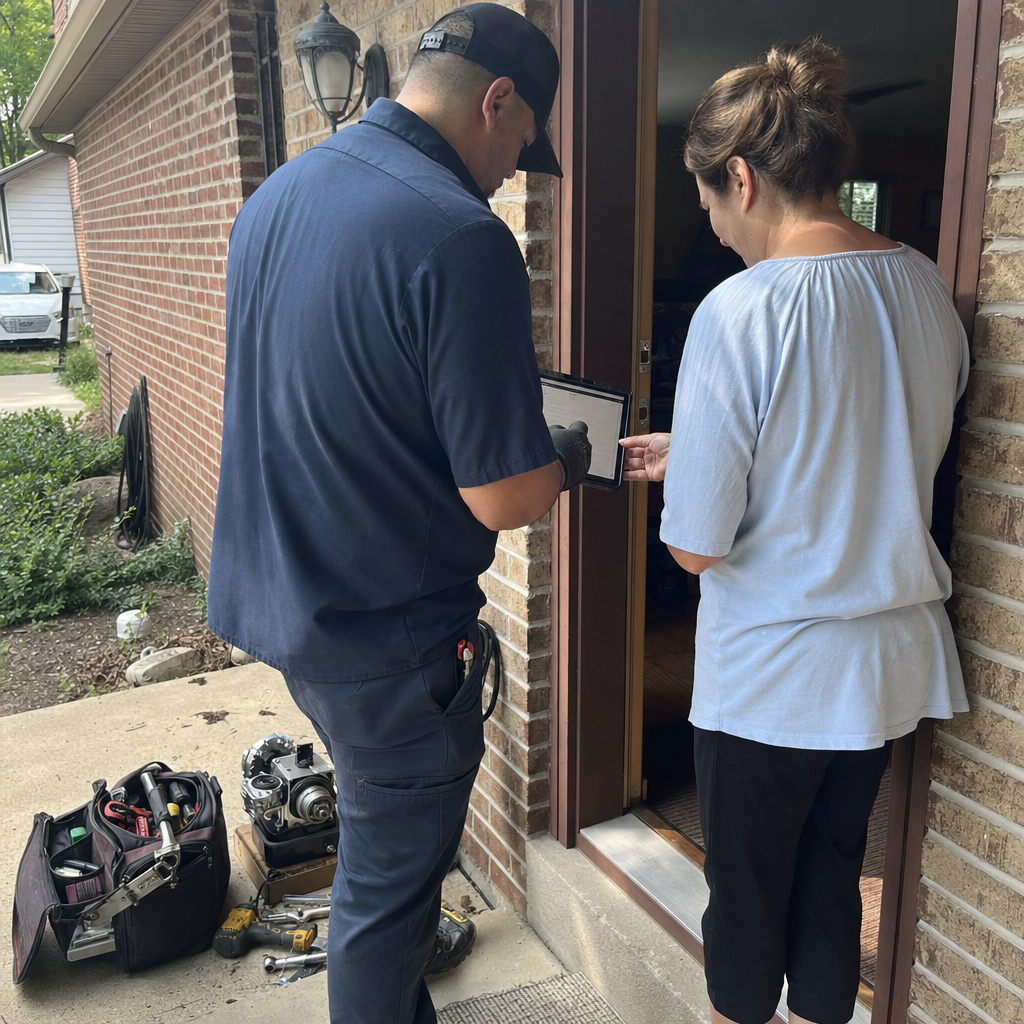
Most emergency gate repairs in Chicago run $180–$450 and are completed same day when you call (866) 406-5812. The two critical scenarios are a stuck-open gate (exposing your alley-access garage to theft) and a stuck-closed gate (trapping vehicles or blocking access to care-dependent residents). Jason Reed — Owner and Lead Technician at Fortress Gate Repair Greater Chicago — carries parts and knows the manual release procedures for LiftMaster, FAAC, BFT, Linear, Viking, Ghost Controls, DoorKing, Elite, and Mighty Mule systems, which means we fix it on the first visit rather than diagnosing by trial and error.
Why Chicago’s Alley-Gate Geography Changes Everything
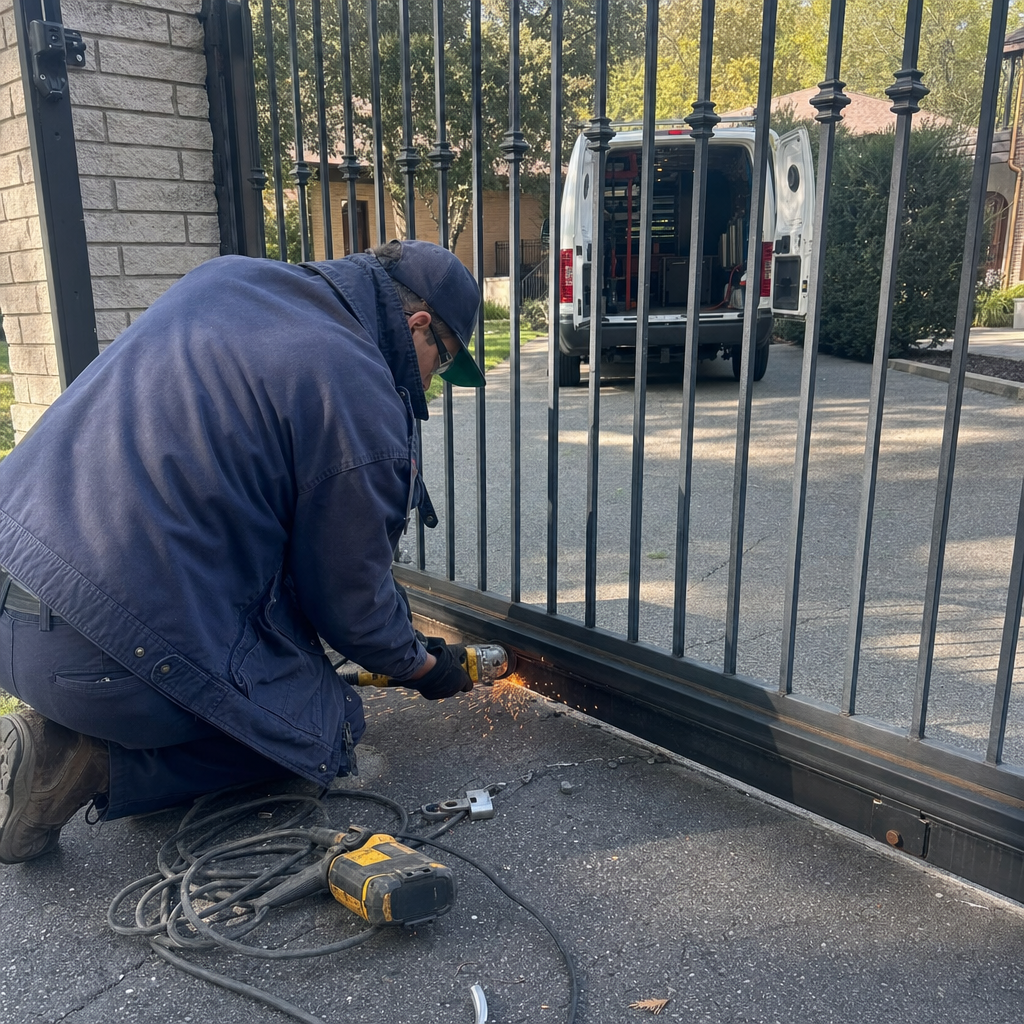
Chicago’s roughly 1,900 miles of paved alleys create a gate repair context unlike anywhere else in the country. Nearly every residential lot backs to an alley, and that rear access gate — usually steel or wrought iron, often original to a 1920s bungalow or two-flat — is the primary security barrier for your garage, not a decorative front entrance.
When that gate fails, the emergency isn’t theoretical. A stuck-open alley gate in Portage Park or Brighton Park means your detached garage is unsecured overnight. A stuck-closed gate means you can’t get your car out for work, or worse — a caregiver can’t reach a resident who needs assistance. We’ve taken calls at 8 p.m. on January nights where the caller’s exact words were, “My mother’s aide is standing outside and can’t get in.”
The economics of response differ sharply between these two scenarios. A stuck-open gate demands immediate temporary securing — we can often manually override and lock the gate tonight, then return for full motor repair in daylight. A stuck-closed gate demands immediate full restoration of function — there’s no “good enough” temporary fix when someone is trapped or access-dependent.
The Two Emergency Archetypes: What They Cost and What Fixes Them
After 14 years of gate-only work in Chicago, we’ve learned that emergency calls cluster into two distinct types with different part needs, labor hours, and price outcomes.
| Emergency Type | Typical Cause | Price Range | Resolution Time |
|---|---|---|---|
| Stuck-open swing or slide gate | Broken weld, sheared pintle, failed motor limit switch, or bent frame from vehicle contact | $180–$320 | 1–2 hours |
| Stuck-closed gate with motor failure | Seized actuator, dead battery backup, failed control board, or frozen lubricant in sub-10°F conditions | $220–$450 | 1.5–3 hours |
| Emergency manual override + lockout | Power outage with dead backup; customer needs gate secured tonight, motor fixed tomorrow | $150–$240 | 45–90 min |
| Post reset after frost heave (winter only) | Gate post shifted below frost line, frame out of plumb, hinges binding | $280–$450 | 2–3 hours |
The winter emergency deserves special attention here. Chicago’s frost line sits around 42 inches, and our heavy clay soils amplify freeze-thaw heaving dramatically. A gate motor that ran fine in October seizes in January when lubricant in the actuator rod thickens below 10°F. This is almost always resolvable without parts if diagnosed correctly — we’ve cleared dozens of these by identifying the thickened grease, applying the correct low-temp replacement, and testing the limit switches. A general handyman who doesn’t know the difference between a standard and low-temp actuator lubricant will quote you a $400 motor replacement for a $220 service call.
On the northwest and southwest side bungalow belts — Portage Park, Archer Heights, Brighton Park — alley gate posts were almost universally set in shallow piers that don’t reach the frost line. After 60–80 winters of heaving, a leaning or non-latching alley gate is essentially the default condition block by block. We carry post-reset equipment and know which hinge angles compensate for predictable seasonal shift.
Why Brand Fluency Is the Emergency Response Differentiator
When Jason takes an emergency call, the first question he asks is which brand is on the post. This isn’t pedantry — it determines whether he arrives with the right parts to close your gate on visit one.
Here’s the reality: a general locksmith or handyman responding to “my gate won’t open” is working blind. They don’t know whether a LiftMaster CSW200 requires a clockwise or counterclockwise manual release turn. They don’t know that FAAC 746 operators have a specific bypass sequence that must be completed in order or the board locks out. They don’t know that Ghost Controls systems have a hidden mechanical release under the cover that most owners never find.
Jason Reed — Owner and Lead Technician — is certified fluent across nine gate and access-control brands: LiftMaster, FAAC, BFT, Linear, Viking, Ghost Controls, DoorKing, Elite, and Mighty Mule. We work on LiftMaster and FAAC systems every week — we know them cold. That fluency saves 20–40 minutes on every emergency call, which at 8 p.m. in January with a stuck-closed gate is the difference between resolution and a second visit tomorrow.
“Tell me what it’s doing — or not doing — and I can usually tell you what’s wrong before I pull into your driveway.”
That specific expertise matters because Chicago’s housing stock demands it. The city’s bungalows, two-flats, three-flats, and greystones — most built 1910s to 1940s — still run their original or near-original ornamental wrought iron or steel alley gates. These aren’t systems you swap for off-the-shelf parts. Corrosion, broken welds, and worn pintles are daily realities, and fixing them requires Gate Repair specialists who fabricate and weld, not installers who only know bolt-on aluminum.
What You Can Do Right Now: Manual Release Steps for Common Chicago Systems
While you’re waiting for us to arrive, these brand-specific manual releases can secure a stuck-open gate or free a stuck-closed one. Use these only if the gate is not under tension stress — if the gate is visibly sagging, binding, or damaged, wait for us.
- LiftMaster slide or swing operators: Locate the red manual release cord hanging from the motor head. Pull firmly downward and away from the motor until you hear a click — the carriage disengages. For slide gates, you can now push the gate manually; for swing gates, move it by hand to the desired position. Re-engage by pulling the cord again and running the motor briefly.
- Ghost Controls swing systems: Remove the operator cover (two thumb screws on most models). The manual release is a small lever on the motor gearbox — flip it toward the arm to disengage. The gate will move freely. Re-engage by returning the lever to its original position before restoring power.
- Mighty Mule swing operators: The release is a pull-pin on the operator arm where it connects to the gate bracket. Pull the pin straight out, move the gate manually, then reinsert the pin fully before operating electrically.
If you’re unsure of your brand or model, check the label on the motor housing — it’s usually visible without tools. Photograph it and text it to us at (866) 406-5812 and we’ll confirm the right procedure before we head out.
Common Local Scenarios We Handle Weekly
These aren’t hypotheticals — they’re calls from last month in Chicago neighborhoods we serve regularly.
The winter seize-up in Portage Park: Customer’s LiftMaster slide gate worked fine Sunday, wouldn’t budge Tuesday morning at 4°F. Jason found thickened factory grease in the actuator rod and a limit switch thrown out of calibration by the thermal contraction. Cleaned, re-lubricated with low-temp compound, reset limits. Two hours, $265, gate running before lunch.
The sheared pintle in Brighton Park: Original 1930s steel alley gate, pintle corroded through at the lower hinge. Gate hanging open at 15 degrees, garage exposed. Jason welded a replacement pintle in place and reinforced the hinge plate. Gate latched securely that evening. Three hours including welding cooldown, $340.
The FAAC board failure in a Bridgeport three-flat: Power surge after a ComEd outage killed the control board; battery backup hadn’t been replaced in four years. Jason bypassed the system manually to free a trapped tenant’s vehicle, returned next morning with a replacement FAAC 780D board and new 12V battery. Total $420 across two visits — but the tenant got to work on time.
The frost-heave bind in Archer Heights: Gate post shifted over winter, frame twisted, slide gate jammed in the track. Jason reset the post below frost line with hydraulic equipment, realigned the track, and adjusted the operator mounting. Four hours, $395 — and we told the owner to expect seasonal check-ins, because that clay soil doesn’t stop moving.
Why 639 Verified Reviews Matter in an Emergency
At 8 p.m. on a January night, you’re choosing who to call based on who answers and who you trust to show up. Our 639 customer reviews at a 4.7-star average aren’t a vanity metric — they’re proof that we’ve handled this exact emergency hundreds of times with consistent results. You can verify response reliability before you call, which matters when you’re standing in a dark alley with a stuck-open gate.
From a broken hinge weld to a full access-control install — one call covers it. Jason Reed works your job directly. Fourteen years of gates, nothing else.
FAQs
Most emergency gate repairs in Chicago cost between $180 and $450, depending on whether the gate is stuck-open (usually simpler, $180–$320) or stuck-closed with motor or control failure ($220–$450). For a detailed breakdown, see our guide on How Much Does Gate Repair Cost? (2026 Price Guide) — Chicago, IL. Winter frost-heave resets and welding repairs run toward the higher end. We quote upfront before starting work — no surprises. Call (866) 406-5812 for a free estimate.
Yes — we prioritize emergency calls for stuck-open and stuck-closed gates in Chicago and aim for same-day response within city limits. Our stock of LiftMaster, FAAC, Linear, and other brand-specific parts means most repairs complete in one visit. If your gate is unsecured tonight, we’ll secure it manually even if full motor repair waits for daylight.
For Chicago’s older iron and steel alley gates, repair is almost always cheaper and preserves the original security and character of the property. A new aluminum or steel gate installation runs $2,800–$6,500 installed, while welding, hinge replacement, and motor repair typically stays under $500. We only recommend replacement when the frame is structurally compromised or parts are obsolete. Call (866) 406-5812 and we’ll assess honestly.
A handyman or locksmith lacks brand-specific training on gate operators and can’t fabricate or weld the iron and steel gates that dominate Chicago alleys. We’ve been called after generalists misdiagnosed limit switch failures as “needs new motor” or applied standard lubricant that seized again in February. Jason Reed’s nine-brand fluency and welding capability mean accurate diagnosis and permanent repair, not temporary patches. Our 639 reviews document the difference.
Call Now: Emergency Gate Repair in Chicago
A stuck gate doesn’t fix itself, and every hour of delay increases risk — whether that’s an unsecured garage, a trapped vehicle, or a missed care visit. Jason Reed answers emergency calls directly and carries the parts to fix LiftMaster, FAAC, BFT, Linear, and five other major brands on the first trip. Call (866) 406-5812 now for a free estimate and same-day response anywhere in Chicago.
Written by Jason Reed, Owner & Lead Technician at Fortress Gate Repair Greater Chicago, serving Chicago, IL.