
Quick Summary
Proper gate installation in Chicago requires specialized engineering to withstand severe winter freeze-thaw cycles, heavy snowfall, and local permitting requirements. Reliable cold-weather performance depends on adequate foundation excavation, weather-sealed access controls, and low-temperature lubricants to prevent post shifting and motor strain. Property owners can contact Fortress Gate Repair Greater Chicago to schedule a consultation and receive a free, detailed written estimate for custom, weather-resilient gate installations.
Gate Installation in Chicago: Practical Guidance for Winter Conditions
Planning a gate installation in Chicago involves accounting for seasonal temperatures, snowfall, and freeze-thaw cycles. Outdoor gate systems generally require appropriate structural anchoring, weather-resistant hardware, and suitable mechanical components to remain aligned and operational through winter conditions.
Navigating municipal regulations is also a key part of project planning. While a fence no more than five feet high may generally qualify for an exemption when zoning requirements are met, public-way or driveway-access work may require separate permits, and historic landmark properties follow specialized design guidelines. Installing proper foundations and compliant electrical connections helps protect the installation over time.[2]
Quick Answer: How Does Professional Gate Installation Work in Chicago?
Project Overview: Professional gate installation typically begins with an on-site evaluation, followed by foundation excavation, post setting, gate mounting, electrical connection where applicable, and integration of automatic operators and safety entrapment sensors. Project timing depends on permitting, site preparation, foundation curing, electrical work, fabrication, gate complexity, and weather, with an estimated 30-day approval period for applicable new driveway applications.[1]
Total project lead time depends on permitting reviews, site preparation, foundation curing, electrical work, custom fabrication, gate complexity, and weather conditions.
Core Requirements for Durable Local Gate Setups
Proper planning helps prevent gate misalignment, post shifting, and motor strain during cold weather. Key project stages include:
- Permitting and regulatory review: The City of Chicago publishes permit records from 2006 to the present, updated daily, and the dataset contains more than 65,000 records for each year across all included permit activity. Ensuring compliance with zoning, electrical, and public right-of-way regulations is essential where applicable.
- Adequate foundation excavation: Excavating footings to appropriate depths for local soil and frost conditions helps prevent ground freeze-thaw cycles from shifting posts out of plumb.
- Cold-weather equipment selection: Verifying manufacturer ratings for low-temperature operation, suitable lubricants, and weather-resistant housings supports reliable winter performance.
What Does Gate Installation Cost in Chicago?
No reliable neutral Chicago-specific cost source was available. Pricing varies significantly based on materials, gate size, automation, electrical work, foundation requirements, and site conditions.
Residential and Commercial Price Breakdown
Project pricing reflects the structural footprint, fabrication materials, automation hardware, and access control technology required for the property.
| Factor | Manual Systems | Automated Residential Systems | Commercial Systems |
|---|---|---|---|
| Core Cost Drivers | Gate panels, structural posts, heavy-duty hinges, manual latching hardware | Motor operator, dedicated electrical trenching, safety photo-eyes, remote controls | Continuous-duty operators, reinforced structural posts, vehicle loop detectors, multi-tenant intercoms |
| Foundation Needs | Post footings sized for local ground and frost conditions | Post footings plus concrete motor pad | Reinforced concrete foundation pads and structural steel columns |
| Automation & Electrical | None (mechanical operation only) | Dedicated power connection, cold-rated gear motor, battery backup | Commercial-grade motor, telephone/cellular entry, access controls, backup power |
| Weather Protection | Galvanized steel, painted iron, or powder-coated aluminum | Weather-sealed motor housings, low-temperature lubricants, sealed keypads | Industrial protective coatings, internal housing protection, corrosion-resistant hardware |
Ongoing maintenance also factors into overall costs. Routine service calls for seasonal hinge adjustments, alignment checks, or electrical diagnostic tests help prevent unexpected operational issues during winter.
Key Cost Drivers: Materials, Automation, and Excavation
Every driveway gate project presents unique site variables. Trenching electrical lines through paved surfaces or decorative pavers adds labor and restoration costs compared to running lines through soft turf. Additionally, custom ornamental ironwork requires more fabrication time than standard prefabricated panels, though both provide perimeter security when properly finished.
Post Footings and Winter Ground Conditions
Need gate installation in Chicago?
We’re available now — call for a fast, free estimate.
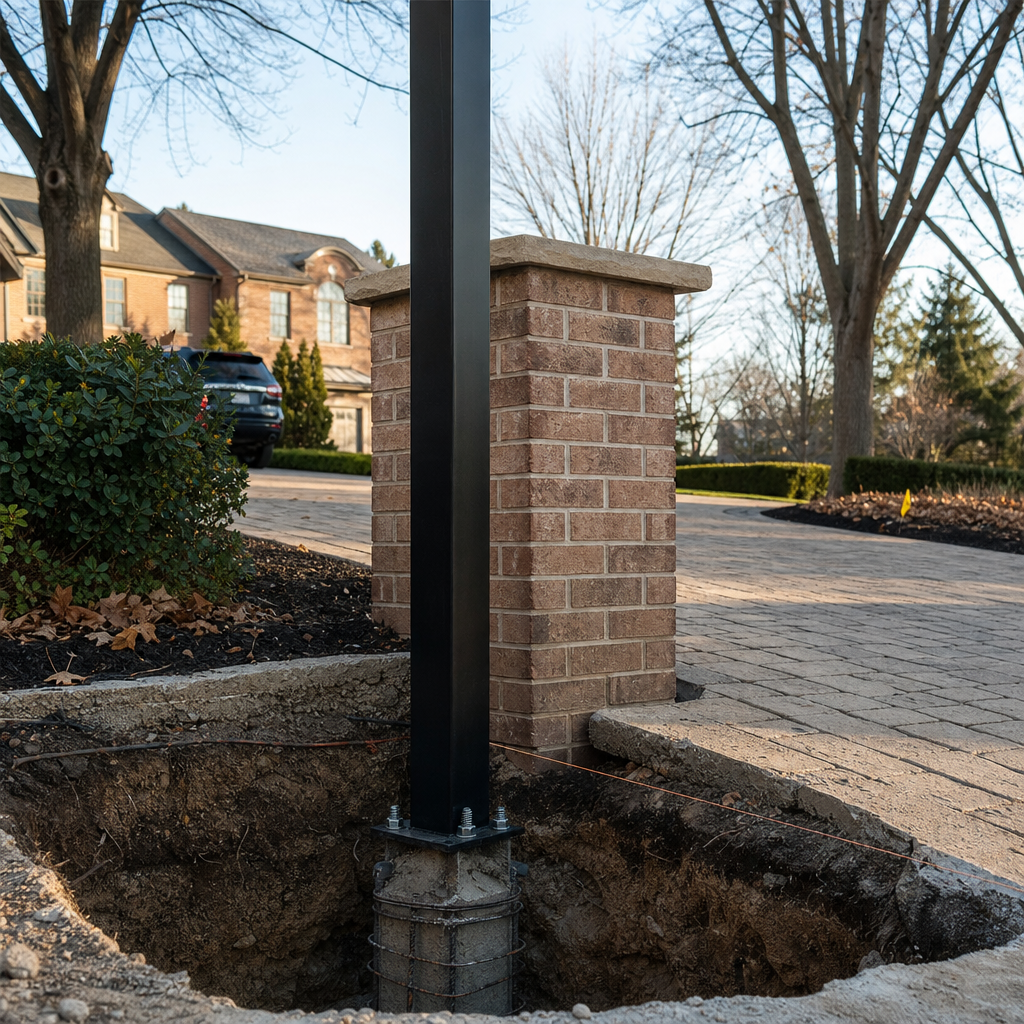
In regions subject to freezing temperatures, gate posts require footings designed to withstand freeze-thaw movement. Because automated gates carry moving loads, shifting posts can cause latches to misalign and place strain on operator hardware.
Freeze-Thaw Cycles and Foundation Depth
When moisture in the soil freezes, ground expansion can exert upward and lateral pressure on post footings. If concrete footings are shallow or improperly drained, frost heave can shift posts out of plumb. This movement can prevent gate latches from catching and cause premature wear on automatic operator arms.
Managing Ground Displacement
Frost heave can exert uneven pressure across different sections of a driveway. According to technicians at Fortress Gate Repair Greater Chicago, setting footings to adequate depths and incorporating proper gravel drainage beneath concrete bases helps reduce the impact of ground movement on gate alignment.
Hardware and Material Considerations
Dependable winter operation relies on durable materials that resist physical stress, moisture, and corrosion:
- Adequately deep concrete piers: Sunk to depths appropriate for local frost conditions to anchor posts securely.
- Heavy-gauge structural steel or aluminum posts: Sized appropriately to resist wind loads and gate weight without flexing.
- Durable ball-bearing hinges: Rated for outdoor use to operate smoothly without binding during cold periods.
- Multi-stage protective coatings: Primers and weather-resistant finishes to protect metal surfaces against moisture and deicing salts.
Automatic Gate Operators and Cold-Weather Planning
When planning an automated gate system, verify cold-weather ratings for operators and controls, provide protection from snow and ice, address drainage, and comply with applicable safety requirements.
Cold-Weather Operator Considerations
Check manufacturer specifications for low-temperature operating limits, lubricants, and drive systems:
| System Type | Cold-Weather Considerations | Key Selection Factors |
|---|---|---|
| Electromechanical Swing / Slide | Standard grease can stiffen in cold conditions; verify low-temperature lubricants | Motor torque ratings, soft-start/stop features, manual emergency releases |
| Hydraulic Swing Operators | Requires cold-rated hydraulic fluid to maintain normal operating speeds in freezing temperatures | Power suitable for gate size and resistance to site wind loads |
| Access Controls & Keypads | Moisture intrusion and extreme cold can affect electronics and backup batteries | Weather-resistant enclosures and appropriate environmental protection |
Slide vs. Swing Gate Considerations
Property layout, available space, and snow management influence the choice of gate style:
- Ground-Track Slide Gates: Ground tracks can accumulate snow, slush, and ice, which may require regular clearing to prevent wheel obstruction.
- Cantilever Slide Gates: Cantilever systems suspend the gate leaf above the ground using counterbalance posts, keeping the gate clear of direct ground-track snow buildup.
- Swing Gates: Swing gates require an unobstructed swing path clear of snowdrifts to avoid overloading the operator motor.
Weather-Resistant Access Control and Safety Devices
Blowing snow, ice accumulation, and freezing moisture can obstruct optical safety sensors or affect electronic components. Using protective sensor hoods, properly sealed enclosures, and weather-rated safety devices helps prevent false trigger signals and maintains safe operation.
Frequently Asked Questions About Chicago Gate Installation
Do I need a building permit to install a driveway gate in Chicago?
Permit requirements depend on the specific project. A fence no more than five feet high may generally qualify for an exemption when zoning requirements are met, while public-way or driveway-access work may require separate permits. In addition, work on designated historic landmark properties may require review by the Commission on Chicago Landmarks.[3]
How much does automatic gate installation cost in Chicago?
No reliable neutral Chicago-specific cost source was available. Total pricing varies depending on gate dimensions, materials, automation equipment, electrical trenching needs, foundation design, and site conditions.
How long does the entire installation process take from design to finish?
Overall installation timing depends on permitting, site preparation, foundation curing, electrical work, fabrication, gate complexity, and weather. An approval estimate of approximately 30 days applies to relevant new driveway applications.
What type of automatic gate is best suited for cold winter weather?
Selection depends on site conditions, driveway layout, and snow management practices. Systems should be planned with appropriate cold-weather ratings for operators and controls, adequate drainage, proper physical clearance for snow and ice, and adherence to relevant safety standards.
Can new operators be installed on existing manual gates?
An existing manual gate can often be automated if the posts, frame, and hinges are structurally sound, plumb, and properly supported. A technician from Fortress Gate Repair Greater Chicago will evaluate post stability, ensure the gate operates smoothly without dragging, add required safety entrapment sensors, and establish appropriate electrical connections.
What maintenance is recommended for local gate systems?
Regular seasonal inspections help maintain reliable operation. Typical maintenance includes checking post alignment, lubricating hinges and mechanical components with appropriate cold-rated lubricants, testing safety sensors, and inspecting electrical connections and operator housings.
Need gate installation in Chicago?
We’re available now — call for a fast, free estimate.
Sources
- Building Permits – City of Chicago – chicago.gov (2008)
- Building Permits – City of Chicago – chicago.gov (2006)
- Permits Customized | City of Chicago | Data Portal – data.cityofchicago.org (2006)
Gate Installation in Nearby Cities
We also serve the communities around Chicago:
- Gate Installation in Addison
- Gate Installation in Arlington Heights
- Gate Installation in Aurora
- Gate Installation in Berwyn
- Gate Installation in Bolingbrook
- Gate Installation in Cicero
- Gate Installation in Des Plaines
- Gate Installation in Elgin
Frequently Asked Questions
Why is a cantilever slide gate often recommended for Chicago driveways in winter?
Unlike ground-track systems that frequently jam with packed snow and slush, cantilever gates remain suspended above the ground using counterbalance posts. This elevated design eliminates ground-track obstruction during severe snowfalls, reducing motor strain and ensuring continuous driveway access.
How deep must gate post footings be excavated to prevent frost heave in Chicago?
Gate post footings must be set below the local frost depth – typically at least 42 inches in the Chicago area – with gravel drainage underneath the concrete piers. Fortress Gate Repair Greater Chicago engineers structural foundations to these depths so seasonal ground expansion does not shift posts or misalign automated latches.
How do cold-weather lubricants and sensor hoods prevent winter gate operator failures?
Standard mechanical grease and hydraulic fluids stiffen in sub-zero temperatures, which strains motor arms and causes operational stalls. Fortress Gate Repair Greater Chicago installs cold-rated operators with low-temperature lubricants alongside protective hoods over optical safety sensors to prevent blowing snow and freezing moisture from causing false stops.
About the author
 |
Marcus Caldwell Marcus Caldwell is a licensed gate automation specialist with over a decade of experience serving the Greater Chicago area. Holding a degree in Mechanical Engineering Technology from Purdue University Northwest, he specializes in diagnosing and repairing complex access control systems. Marcus is dedicated to providing property owners with reliable, long-lasting security solutions and sharing practical maintenance advice. |
Gate not opening, off track, or opener dead?
We’re available now — call for a fast, free estimate.
Call Now - Free Estimate